Staying Power: What West Palm Beach Needs Next
West Palm can permit a tower in a matter of months. It cannot permit a sixty year oak. A case for measuring who stays, not who arrives.
By Greg Forest
SERHANT. | Palm Beach Brokerage · September 4, 2026 · 11 min read
Updated September 9, 2026. A section on measuring retention was added.
A new piece every month
Let me start with my bias, because it belongs on the table before the argument. I sell real estate. More towers mean more transactions, and I am genuinely pro development. When Related Ross announces another $10 billion, I am typically not the man firing off letters to the zoning board.
But I think we are measuring this boom by the wrong things, and I want to make the case for what actually determines whether it works.
We are counting arrivals. Nobody is counting who stays
Right now the coverage counts units, dollars and stories. A record $772 million construction loan. A twenty five story tower filed on Fern Street. Transit Village at 986 units. A thousand graduate students arriving with Vanderbilt. Those are real numbers and they are worth reporting.
Here is what none of them measure. Of the people who moved here in 2021, how many are still here?
Nobody publishes that figure. Not the city, not the Business Development Board, not the brokerages. We have built an entire civic scoreboard out of in-migration and left out the only number that tells you whether any of it worked. A city can post record arrivals for a decade and still be churning, and you would not know until the leases stopped renewing.
That is the question this piece is about. Not whether they come. Whether they stay.
The buyer pool is smaller than the headlines suggest, and that's fine
There's a version of this story that's all billionaires. Ellison in Manalapan. Bezos and Zuckerberg on Indian Creek. I'm not dismissing it. We've been closer to it than most, with several transactions in recent years involving names that have appeared on the ever-changing Forbes 400.
But that tier is a client list, not a market. You cannot build a city, or a business, on a handful of households.
The volume is in the tier underneath, and it's the one that actually fills a building: the C-suite executive whose firm relocated, the upper management family that came with it, the salespeople who earn well, the business owners. That is not a huge pool. It is a serious one, and it arrives for a specific reason. A good company moved here.
Which is the part I'd like more people to say out loud. When a good company moves to West Palm Beach, the story isn't just that another floor got leased. Good businesses pay well. They insure their people properly. They offer family plans that make it possible to move a household eight hundred miles. That is what converts a relocation into a purchase.
And on cost. The headline is real, and it is worth being precise about which headline it is. The Miami metro is now more expensive than greater New York for the first time on record, and South Florida's cost of living has climbed thirty six percent since 2019. Insurance and property tax are doing most of that work, not groceries. For a family of four it is painful. But for the person this city is actually recruiting, the arithmetic still works. New York charges a state income tax, and New York City charges a second one on top of it. Between them, a high earner hands over about fifteen cents of every dollar before the federal government takes its share. Florida charges neither. Someone earning two million a year keeps close to three hundred thousand more here, every year, for doing nothing but changing addresses. Groceries and insurance did go up. They did not go up by three hundred thousand dollars.
So the tax math brings them. The tax math does not keep them, because the tax math is identical in Naples, in Tampa, in Jupiter and in Miami. Whatever holds someone here has to be something those places do not have.
Towers are supply. Canopy is scarcity
Here is the asymmetry I would put at the center of this.
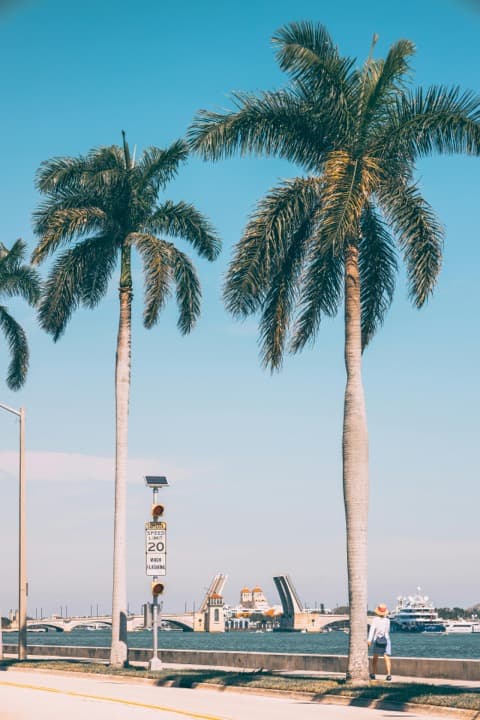
You can permit a tower in a matter of months. You cannot permit a sixty year oak.
Towers are supply. Canopy is scarcity.
West Palm is adding, at enormous speed, the one thing that can always be added. Every unit that opens makes the next unit slightly less scarce. That is how supply works, and it is not a criticism, it is the point of building.
Meanwhile the thing that cannot be added is not being added at all. The number of tree-lined single-family streets east of the water is exactly what it was a decade ago, and it will be exactly that a decade from now. Nothing in a $10 billion pipeline changes that number. It is fixed, and every tower makes it scarcer by raising the population competing for it.
If you own the fixed thing, this is a very good decade. That is my business and I will not pretend otherwise. But a city whose only appreciating asset is the part nobody is building has a retention problem waiting for it, because the people filling the new towers are the ones who will eventually ask what they are staying for.
The best neighborhoods anywhere have the most mature trees. That is not sentiment. It is the most reliable pattern I know in this business. Look at where people here already want to live and notice how many of the names end in Park. Flamingo Park. Prospect Park. Southland Park. Nobody named them after the buildings. Canopy takes thirty years to grow and an afternoon to remove, and it is the clearest signal there is of whether a place has been cared for.
It already worked here, once
I don't have to argue this from theory, because it already happened here. Whatever you think about the scale of what Related Ross is building, Stephen Ross has been an ally for West Palm Beach. The landscaping they put into CityPlace changed how that part of downtown feels. There is shade where there was pavement. People walk it in the evening. I know families who drive down from Jupiter and up from Delray to spend a Saturday there, and that was not true five years ago. In my view he is the single biggest reason West Palm Beach is a better city to experience today than it was then, and almost none of that is about the height of the buildings. It is about what he planted between them.
That is the lesson I would take into the next ten billion dollars. What we build needs curb appeal, and curb appeal starts with landscaping.
None of this is a new idea. The generation that laid out American cities at the turn of the last century called it the City Beautiful movement, and they were not making an argument about taste. They believed that boulevards, parks and street trees produced civic pride, and that civic pride produced prosperity. Flagler platted West Palm Beach in 1894, in the same decade, working from the same instinct. He was not only building hotels. He was laying out a place he expected people to stay in. A hundred and thirty years later, the addresses that generation made are still the expensive ones.
Palm Beach wrote its own version in 1929. The Garden Club sponsored a town plan, the Town Council adopted it, and one of the things it asked for was a park at the foot of the Flagler bridge. That park was built. It is Bradley Park, it is still there, and the Garden Club still plants trees in it every Arbor Day. A private club paid to plan the public realm, and a century later the result is the part nobody would give up.
Who takes care of it
If we want people to buy here rather than rent for two seasons and leave, we need a downtown people actually want to walk around in, not one they drive to, park beneath, and escape.
I'd point to Bryant Park. I spent time there this past year, and through someone whose family is close to the head of security I got to see how it is actually run and how carefully it is kept safe. It is the cleanest and best kept park in New York, and the reason is that it is not run the way the others are. The city owns it, but a private nonprofit manages it, and it takes no tax money to operate. It funds itself out of what happens inside it: the restaurants, the concessions, the Winter Village. A great public space turned out to be an economic engine rather than a line item.
That is not an argument against public space. It is an argument about who takes care of it, and it is a model that could work here, where a handful of developers have enormous concentrated interest in whether the entire downtown is pleasant, not just a block of it.
If you are building $10 billion of it, the trees and the sidewalks are not somebody else's department.
The waterfront, and what it revealed
Which brings me to what this city has spent the spring arguing about.
The proposal was a thirty million dollar park along Flagler Drive, privately funded, turning pavement into green space that runs to the water. On the substance that is the argument I have just spent two thousand words making, and I would take it tomorrow.
It stalled anyway. E.R. Bradley's has been on that corner for twenty five years, and the family that owns it says they were pressured to sell with eminent domain raised as the alternative. The mayor says the city never pursued it. I am not in a position to adjudicate that and I am not going to pretend I am.
But the outcome is worth noticing. A city that badly wants more green space paused a park somebody else was paying for, and the fight was never about the trees. It was about how it was done, and who got asked.
That is a retention problem too, incidentally. People do not stay in places where things get decided for them.
What I would ask the candidates
West Palm Beach elects a new mayor in March of 2027. Most of that conversation will be about what gets built, and it should be. But there are two questions I'd like to hear answered.
Who is responsible for the ground between the buildings? The sidewalks, the shade, the drainage, the lighting, the benches, and who looks after all of it once the ribbon is cut. A tower can put a street in shadow for a decade before anyone notices what stopped growing underneath.
And what is our retention rate? If we cannot say how many of the people we recruited in 2021 are still here in 2026, we are flying on one instrument.
Seasonal was never the problem
I asked the candidates what our retention rate is. I should say what I think it measures, because the obvious answer is the wrong one.
The obvious answer is how many people made this their primary residence. That is the wrong instrument for this county, and Palm Beach is the proof. The island has been a seasonal town for a hundred years. The families who built its clubs, its churches, its schools and its museums arrived in November and left in April, and nobody would say they were not residents. They founded the things that are still standing. The Garden Club that planned Bradley Park in 1929 was seasonal.
Being seasonal never cost a place its fabric. Being one of several does.
Somebody with a house here and a house north spends five months here. They join something. Their children turn up at the same school every October. They know who to call about the drainage on their street. Somebody with five houses spends three weeks here, and three weeks in each of the others, and joins nothing anywhere. Same deed. Same tax bill. Completely different town.
That is the real competition, and it was never West Palm against Palm Beach. It is Aspen, Nantucket, Jackson and the Hamptons. The question is not whether people buy here, because they are buying everywhere. It is whether we are one of many or whether we are the one.
Which gives us something to count, and none of it is a permit.
What stays open in August. Take the restaurants that close for the season, street by street, and take them again next year. If the season is stretching from December through April into October through May, presence is rising and the rest follows it.
Enrollment at the schools. Families are the hardest households to win and the least likely to leave. Palm Beach Day Academy, Oxbridge, Rosarian, the public schools east of the water. That number moves before anything in the MLS does.
Voter registration by ZIP. A deed records where somebody bought. Registering to vote records where they are from.
And where the next move goes. When somebody's first purchase here is a condo downtown and the second is a house four blocks away, we kept them. When the second one is in Jupiter, or back north, we did not. It is visible to anyone who bothers to look, and nobody looks.
None of that is hard to gather. It is just nobody's job, which is the same problem as the sidewalks.
Where I sell, and why it matters
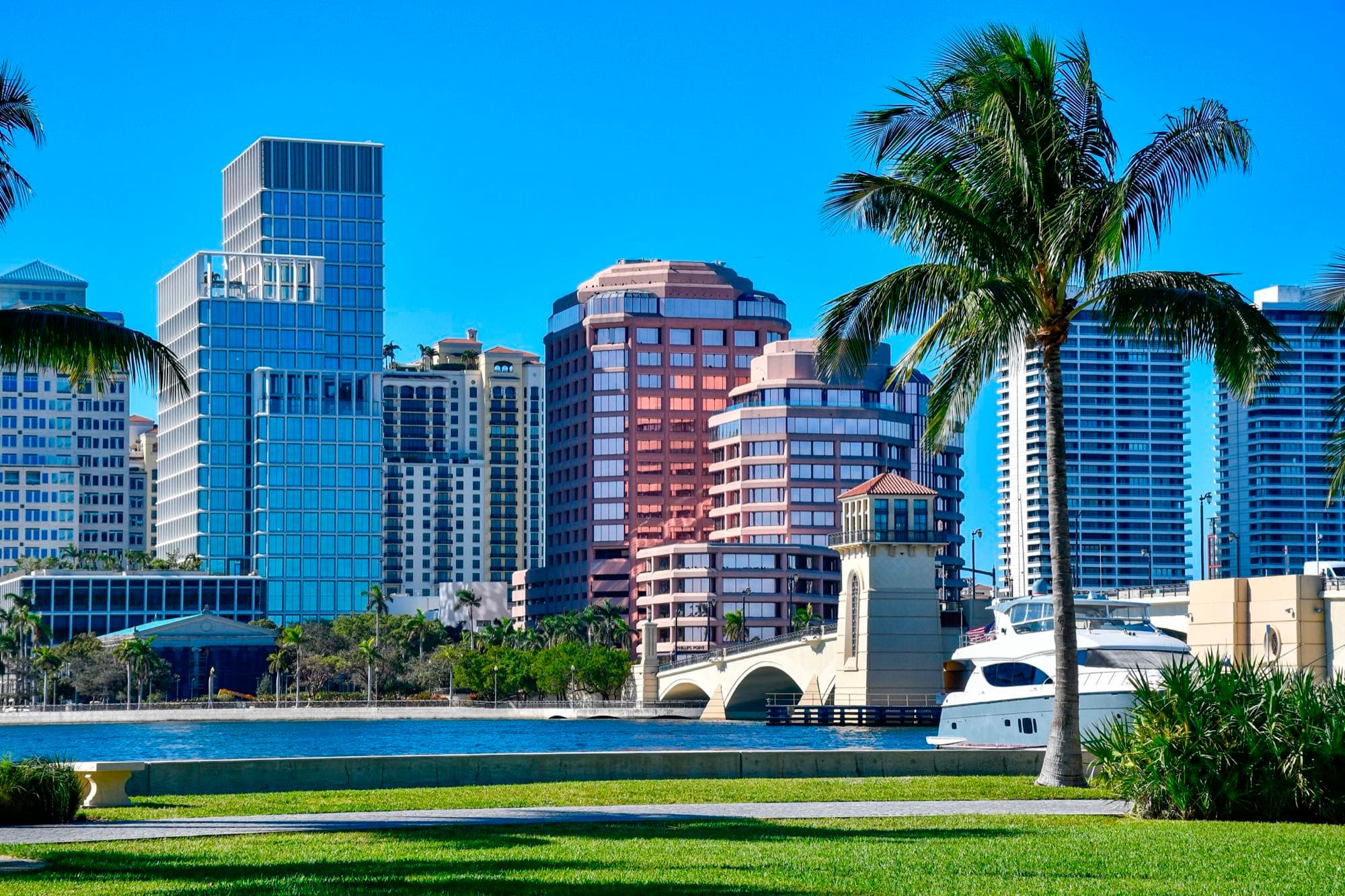
The neighborhoods I work, Palm Beach and the East corridor of West Palm Beach, sit deliberately just outside all of this. They benefit from proximity to a growing city without being inside it. Quiet streets, old canopy, a bridge between you and the cranes.
That is the product, and it is finite. I would rather it were not. I would rather the thing I sell were reproducible, because a city that can make more of it is a city people stay in.
I want the right towers. I want the right companies, and the salaries and the benefits that come with them. And I want the city they are landing in to be one where the canopy is thicker in 2036 than it is today, because that is what will decide whether the people we recruited stay long enough to become the fabric of our big little city.
Ask me in ten years. I will be looking at the trees.